Thursday, February 11, 2010

Help Me Go to Honduras!

Hello Everyone!

https://fundraising.intelis.com/gbl/AThons/Home.jsp?Person=cc0d0bb811fa54bce16100120ff06301&Event=cc0d0bb8120f9a95767100163f71236f

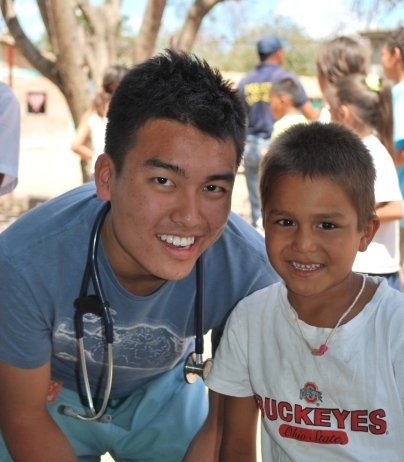
I will soon be joining a group of other dedicated students and medical professionals, on a trip to Honduras to conduct a "medical brigade" to treat more than 1,500 patients in communities without access to health care otherwise. Our group will function like a mobile medical unit, setting up small clinics to diagnose and treat patients at no cost. From in-take, to triage, to medical consultations, to filling the prescriptions, I will have experienced the many realms of the medical profession under the guidance of licensed medical professionals.

To make this trip a success, I need your help in one of three ways:

1) As a sponsor champion (any amount) to help me pay for my trip and to create permanent health care clinics in our villages (donate below)

2) Join me on the brigade, especially if you are a medical professional

3) And/or send me warm thoughts and prayers as I embark on my brigade

Thank you for your support!

Monday, January 4, 2010

Wednesday, December 2, 2009

World AIDS Day 2009

In today's class, Dr. Reid referred me to this article regarding South Africa's new HIV/AIDS policies. After learning about various policy structures from speaking to members of the Ministry of Health in Mozambique, it is interesting to see some of the similarities that President Zuma has mentioned in this article regarding prevention of maternal to child transmission.


THE NEW YORK TIMES: http://www.nytimes.com/2009/12/02/world/africa/02safrica.html?_r=1&ref=world#

JOHANNESBURG — President Jacob Zuma, taking a concrete step away from the South African government’s previous delays in providing drugs to treat AIDS and prevent women from infecting their newborns, declared Tuesday in a national address on World AIDS Day that drug therapy for H.I.V.-positive pregnant women and babies would be broadened and start earlier.

Waldo Swiegers/Associated Press

President Jacob Zuma of South Africa during a national address he gave in Pretoria on Tuesday, World AIDS Day.

The new policy on pregnant women, aimed at ensuring that babies are born healthy, is in line with the new treatment guidelines issued by the World Health Organization just a day before. Treating infected babies earlier is expected to help South Africa, one of only four countries where child mortality has worsened since 1990, improve the survival odds of its youngest citizens.

The alacrity with which the government adopted the health organization’s advice and extended access to AIDS drugs gives substance to Mr. Zuma’s break with the views of his predecessor, Thabo Mbeki, who during almost a decade in office had questioned whether H.I.V. causes AIDS and suggested that antiretroviral drugs could be harmful.

More people are H.I.V. positive here than in any other nation, and Mr. Zuma called on South Africans to struggle against AIDS as they had against apartheid. “We have no choice but to deploy every effort, mobilize every resource and utilize every skill our nation possesses,” he said.

The policy changes he announced will expand access to treatment. Mr. Zuma said that by April the government would start treating H.I.V.-positive people with tuberculosis earlier, when their immune systems are stronger — a step the World Health Organization said would reduce death rates. Tuberculosis is the leading killer of South Africans with H.I.V., the virus that causes AIDS, and deaths from tuberculosis have more than tripled here since 1997.

“What does this all mean?” Mr. Zuma asked in his address, broadcast on public television. “It means that we will be treating significantly larger numbers of H.I.V.-positive patients. It means that people will live longer and more fulfilling lives.”

Mr. Zuma’s emergence as the first South African president to seize center stage on AIDS comes with its own subplots. Just three years ago, he admitted while on trial for rape that he knowingly had had sex with a woman infected with H.I.V. without using a condom, saying he showered afterward to minimize his risk of infection. Though acquitted, his words became fodder for cartoonists and critics.

That tarnished personal record served as a backdrop to his speech Tuesday, as he rallied his fellow South Africans to learn their H.I.V. status, promised to get another H.I.V. test himself and urged the nation to “use condoms consistently and correctly during every sexual encounter.”

Harvard researchers estimated last year that the delay by Mr. Mbeki’s government in using antiretroviral drugs to prevent women from infecting their newborns earlier this decade led to the deaths of 35,000 babies, and that 330,000 people died prematurely for lack of treatment.

Despite Mr. Zuma’s break with Mr. Mbeki on AIDS, he has apparently rejected a rising public clamor here, even among some of his party’s allies, for an accounting of Mr. Mbeki’s culpability.

The Congress of South African Trade Unions said Monday that Mr. Mbeki should apologize to the nation for his failures in fighting an epidemic it has described as “destroying more lives than any invading army in history.” The Young Communist League has demanded that Mr. Mbeki be prosecuted for genocide.

Business Day, a newspaper, editorialized on Nov. 20 that a murder trial and cross-examination of witnesses offered the possibility of extracting some truth. “The prospect of having a bite at understanding the Mbeki madness beckons,” the paper wrote, “even if legal charges might not ultimately stick.”

Mr. Mbeki, asked in a rare interview with the newspaper The Sunday Independent published on Nov. 1 if he had any regrets about his nine years as president, made no mention of AIDS.

Mr. Zuma and his party clearly have no desire to open an inquiry into the government’s record on AIDS. Mr. Zuma was Mr. Mbeki’s deputy president until Mr. Mbeki fired him in 2005. And like virtually all the leaders of the African National Congress, Mr. Zuma did not publicly oppose Mr. Mbeki on AIDS.

In an article published Tuesday in The Star, a daily newspaper, Mr. Zuma defended the government’s record and said that under past presidents from his party, specifically mentioning Mr. Mbeki, the government had put in place “strategies to comprehensively deal with H.I.V./AIDS.” He argued that as the government seeks to do still more, “We should avoid being drawn into an agenda of blame and recrimination.”

Still, Mr. Zuma’s approach on Tuesday — to speak frankly to the nation about each individual’s responsibility to prevent the spread of AIDS by changing his or her sexual behavior and to lay out new policies on life-saving treatment — won him wide praise from the advocates who had despaired under Mr. Mbeki.

In another significant vote of confidence, Donald Gips, the American ambassador to South Africa, announced that the United States would give South Africa $120 million over the coming two years to help meet the growing demand for antiretroviral drugs. That comes on top of the $560 million the United States was already planning to give South Africa in the 2010 fiscal year to fight AIDS.

But South Africans may best remember Mr. Zuma’s speech for his embrace of those who have suffered because of the epidemic or been shunned by society and their families. Among those listening Tuesday at the Pretoria show grounds was the daughter of Gugu Dlamini, a woman stoned and stabbed to death in 1998 near Durban after she said on the radio that she was H.I.V. positive.

While Mr. Mbeki once said he had never known anyone who died of AIDS, Mr. Zuma offered his sympathy.

“To families looking after sick relatives, we wish you strength,” he said. “We understand what you are going through. To those who have lost their loved ones to the epidemic, we share your pain and extend our deepest condolences.”

Sunday, November 29, 2009

Honduras - So Much Drama!

Honduras voting for new president

Posters of Porfirio Lobo in a street in Honduras
Porfirio Lobo is considered the favourite to win

Presidential elections are under way in Honduras, five months after a political crisis ousted President Manuel Zelaya.

He was forced from Honduras at gunpoint in June, and replaced by Roberto Micheletti. Neither are candidates.

The favourite to win is conservative Porfirio Lobo from the National Party, and Elvin Santos from the Liberal Party is considered his nearest rival.

Mr Zelaya has called for a boycott of the election. Voting began at 0700 (1300 GMT) and will last nine hours.

Mr Lobo, 61, narrowly lost to Mr Zelaya in 2005, and Mr Santos, 46, was previously Mr Zelaya's vice president in the divided Liberal Party.

About 30,000 soldiers and police are to provide security for the elections, but many fear violence could erupt.


The political crisis and election have divided the region, with the US indicating it would endorse the result if the elections are deemed "free and fair".

Costa Rica, which has long been the mediator between the two sides in this crisis, has said likewise, but other Latin American countries have opposed the vote.

Argentina and Brazil have said they will not recognise any government installed after the election, arguing that to do so would legitimise the coup which ousted an elected president, and thus set a dangerous precedent.

The main regional grouping, the Organisation of American States, has declined to send an observer mission.

BBC correspondent Stephen Gibbs in the capital Tegucigalpa says that while supporters of Mr Zelaya are watching events with dismay, many Hondurans are expressing optimism that an end to the country's political crisis is in sight.

Congress is due to vote on Mr Zelaya's reinstatement on 2 December. His term ends on 27 January.

Mr Micheletti temporarily stepped down from office - for a week until 2 December - to allow the elections to proceed "peacefully and transparently", his spokesman said.

Mr Zelaya was forced into exile on 28 June after trying to hold a vote on whether a constituent assembly should be set up to look at rewriting the constitution.

His critics said the vote, which was ruled illegal by the Supreme Court, aimed to remove the current one-term limit on serving as president and pave the way for his possible re-election.

Mr Zelaya has repeatedly denied this and some commentators say it would have been impossible to change the constitution before his term in office was up.

He sneaked back into the country in September and has been living in the Brazilian embassy in Tegucigalpa.


Another country that I have been passionate about is Honduras. Last March, I traveled to Honduras on a medical mission trip. Soon after, the coup of the president made me realize the politics in this beautiful country was not quite as peaceful as I had imagined.

It will be very interesting to observe the elections in Honduras as it progresses!

Wednesday, November 18, 2009

Back Home

Well, it has been a few weeks since I returned from South Africa and Mozambique. After catching up a little bit with school, going to Chicago for the Federal Reserve Challenge, and taking a few midterms, I think I can finally reflect on my incredible experiences.

First, the opportunity to interview a former president of any country is something that is pretty unique. Former President Chissano's interview regarding his country's progress towards democracy is something that not too many people can say that they did. And I am very honored to have been a part of the experience.

The presidential election observing was the most profound when I was able to interview voters while they were waiting in line. The lines were pretty long and it was warm, but everybody was in order and patient. The most significant thing was that everybody that I spoke to was proud of their country's movement toward democracy and multi-party elections, but many also expressed hope for something better in the future. They recognized that the 2009 elections were not necessarily the best model, but they realized this flaw. The notion that the younger generation is pushing for MDM and the older generation is pushing for Frelimo may be true, but from my interviews, I got the message that Frelimo is preferred because people are afraid of change. They are nervous about a completely new party coming into office without having any experience. Well, of course they don't have experience...because the ruling party will go out of its way (plaster the city with Guebuza posters, fly in helicopters, spend incredible amounts of money on their campaign) in order to prevent any other party from having any experience.

What really made me realize the impact of Frelimo in Mozambique is the fact that everybody was censoring what they were saying about Frelimo when they were talking to us. Ministry officials even refused to talk to us...you know, probably because they will lose their jobs if anybody high in office heard about it. I wonder if there are any Mozambican "Will Ferrells" doing SNL sketches mocking President Guebuza? Probably not...


I truly hope that Mozambique is able to prosper and let their people have their say in government and have the ability to speak freely in their country. After seeing the election results and the breakdown of representatives within each of the provinces, I am not too sure how this is going to happen, but there is always hope.

So, what did I bring back??? Certainly, not a lot of souvenirs because 1) My luggage couldn't handle a 35 pound wood carving of a hippopotamus 2) I am a horrible shopper/barterer. (Michelle snatched about 10 canvas paintings when I only got 3....for the same price).
I did bring back some pretty cool things though. First would be some very neat friends. Meeting people and sharing adventures with them has formed a very quick bond between all of us and it is pretty exciting. As Sumate said on the first day we met, "we're all family". The second thing that I gained was inspiration and an increased confirmation of what I want to do with my life after medical school. I know that has always been a calling for me to serve others, but I was unsure of where I was supposed to go. The more I listen to the clues though, I have a greater sense of where that "where" is supposed to be.