Friday, June 11, 2010
South Africa World Cup 2010
Monday, May 3, 2010
Graduation!
Wayne State MedStart Class of 2010 from YoungKey Chung on Vimeo.
Thursday, February 11, 2010
Help Me Go to Honduras!
https://fundraising.intelis.com/gbl/AThons/Home.jsp?Person=cc0d0bb811fa54bce16100120ff06301&Event=cc0d0bb8120f9a95767100163f71236f
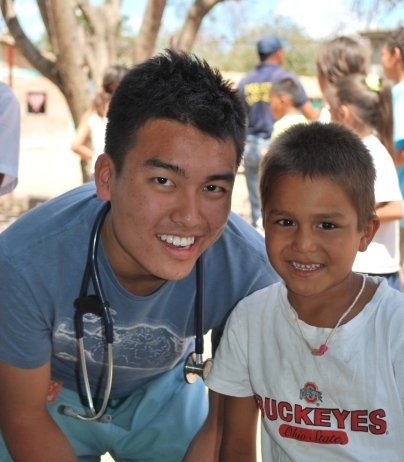
I will soon be joining a group of other dedicated students and medical professionals, on a trip to Honduras to conduct a "medical brigade" to treat more than 1,500 patients in communities without access to health care otherwise. Our group will function like a mobile medical unit, setting up small clinics to diagnose and treat patients at no cost. From in-take, to triage, to medical consultations, to filling the prescriptions, I will have experienced the many realms of the medical profession under the guidance of licensed medical professionals.
To make this trip a success, I need your help in one of three ways:
1) As a sponsor champion (any amount) to help me pay for my trip and to create permanent health care clinics in our villages (donate below)
2) Join me on the brigade, especially if you are a medical professional
3) And/or send me warm thoughts and prayers as I embark on my brigade
Thank you for your support!
Monday, January 4, 2010
Wednesday, December 2, 2009
World AIDS Day 2009
THE NEW YORK TIMES: http://www.nytimes.com/2009/12/02/world/africa/02safrica.html?_r=1&ref=world#
JOHANNESBURG — President Jacob Zuma, taking a concrete step away from the South African government’s previous delays in providing drugs to treat AIDS and prevent women from infecting their newborns, declared Tuesday in a national address on World AIDS Day that drug therapy for H.I.V.-positive pregnant women and babies would be broadened and start earlier.
The new policy on pregnant women, aimed at ensuring that babies are born healthy, is in line with the new treatment guidelines issued by the World Health Organization just a day before. Treating infected babies earlier is expected to help South Africa, one of only four countries where child mortality has worsened since 1990, improve the survival odds of its youngest citizens.
The alacrity with which the government adopted the health organization’s advice and extended access to AIDS drugs gives substance to Mr. Zuma’s break with the views of his predecessor, Thabo Mbeki, who during almost a decade in office had questioned whether H.I.V. causes AIDS and suggested that antiretroviral drugs could be harmful.
More people are H.I.V. positive here than in any other nation, and Mr. Zuma called on South Africans to struggle against AIDS as they had against apartheid. “We have no choice but to deploy every effort, mobilize every resource and utilize every skill our nation possesses,” he said.
The policy changes he announced will expand access to treatment. Mr. Zuma said that by April the government would start treating H.I.V.-positive people with tuberculosis earlier, when their immune systems are stronger — a step the World Health Organization said would reduce death rates. Tuberculosis is the leading killer of South Africans with H.I.V., the virus that causes AIDS, and deaths from tuberculosis have more than tripled here since 1997.
“What does this all mean?” Mr. Zuma asked in his address, broadcast on public television. “It means that we will be treating significantly larger numbers of H.I.V.-positive patients. It means that people will live longer and more fulfilling lives.”
Mr. Zuma’s emergence as the first South African president to seize center stage on AIDS comes with its own subplots. Just three years ago, he admitted while on trial for rape that he knowingly had had sex with a woman infected with H.I.V. without using a condom, saying he showered afterward to minimize his risk of infection. Though acquitted, his words became fodder for cartoonists and critics.
That tarnished personal record served as a backdrop to his speech Tuesday, as he rallied his fellow South Africans to learn their H.I.V. status, promised to get another H.I.V. test himself and urged the nation to “use condoms consistently and correctly during every sexual encounter.”
Harvard researchers estimated last year that the delay by Mr. Mbeki’s government in using antiretroviral drugs to prevent women from infecting their newborns earlier this decade led to the deaths of 35,000 babies, and that 330,000 people died prematurely for lack of treatment.
Despite Mr. Zuma’s break with Mr. Mbeki on AIDS, he has apparently rejected a rising public clamor here, even among some of his party’s allies, for an accounting of Mr. Mbeki’s culpability.
The Congress of South African Trade Unions said Monday that Mr. Mbeki should apologize to the nation for his failures in fighting an epidemic it has described as “destroying more lives than any invading army in history.” The Young Communist League has demanded that Mr. Mbeki be prosecuted for genocide.
Business Day, a newspaper, editorialized on Nov. 20 that a murder trial and cross-examination of witnesses offered the possibility of extracting some truth. “The prospect of having a bite at understanding the Mbeki madness beckons,” the paper wrote, “even if legal charges might not ultimately stick.”
Mr. Mbeki, asked in a rare interview with the newspaper The Sunday Independent published on Nov. 1 if he had any regrets about his nine years as president, made no mention of AIDS.
Mr. Zuma and his party clearly have no desire to open an inquiry into the government’s record on AIDS. Mr. Zuma was Mr. Mbeki’s deputy president until Mr. Mbeki fired him in 2005. And like virtually all the leaders of the African National Congress, Mr. Zuma did not publicly oppose Mr. Mbeki on AIDS.
In an article published Tuesday in The Star, a daily newspaper, Mr. Zuma defended the government’s record and said that under past presidents from his party, specifically mentioning Mr. Mbeki, the government had put in place “strategies to comprehensively deal with H.I.V./AIDS.” He argued that as the government seeks to do still more, “We should avoid being drawn into an agenda of blame and recrimination.”
Still, Mr. Zuma’s approach on Tuesday — to speak frankly to the nation about each individual’s responsibility to prevent the spread of AIDS by changing his or her sexual behavior and to lay out new policies on life-saving treatment — won him wide praise from the advocates who had despaired under Mr. Mbeki.
In another significant vote of confidence, Donald Gips, the American ambassador to South Africa, announced that the United States would give South Africa $120 million over the coming two years to help meet the growing demand for antiretroviral drugs. That comes on top of the $560 million the United States was already planning to give South Africa in the 2010 fiscal year to fight AIDS.
But South Africans may best remember Mr. Zuma’s speech for his embrace of those who have suffered because of the epidemic or been shunned by society and their families. Among those listening Tuesday at the Pretoria show grounds was the daughter of Gugu Dlamini, a woman stoned and stabbed to death in 1998 near Durban after she said on the radio that she was H.I.V. positive.
While Mr. Mbeki once said he had never known anyone who died of AIDS, Mr. Zuma offered his sympathy.
“To families looking after sick relatives, we wish you strength,” he said. “We understand what you are going through. To those who have lost their loved ones to the epidemic, we share your pain and extend our deepest condolences.”
Sunday, November 29, 2009
Honduras - So Much Drama!
Honduras voting for new president
| Porfirio Lobo is considered the favourite to win |
Presidential elections are under way in Honduras, five months after a political crisis ousted President Manuel Zelaya.
He was forced from Honduras at gunpoint in June, and replaced by Roberto Micheletti. Neither are candidates.
The favourite to win is conservative Porfirio Lobo from the National Party, and Elvin Santos from the Liberal Party is considered his nearest rival.
Mr Zelaya has called for a boycott of the election. Voting began at 0700 (1300 GMT) and will last nine hours.
Mr Lobo, 61, narrowly lost to Mr Zelaya in 2005, and Mr Santos, 46, was previously Mr Zelaya's vice president in the divided Liberal Party.
About 30,000 soldiers and police are to provide security for the elections, but many fear violence could erupt.
The political crisis and election have divided the region, with the US indicating it would endorse the result if the elections are deemed "free and fair".
Costa Rica, which has long been the mediator between the two sides in this crisis, has said likewise, but other Latin American countries have opposed the vote.
Argentina and Brazil have said they will not recognise any government installed after the election, arguing that to do so would legitimise the coup which ousted an elected president, and thus set a dangerous precedent.
The main regional grouping, the Organisation of American States, has declined to send an observer mission.
BBC correspondent Stephen Gibbs in the capital Tegucigalpa says that while supporters of Mr Zelaya are watching events with dismay, many Hondurans are expressing optimism that an end to the country's political crisis is in sight.
Congress is due to vote on Mr Zelaya's reinstatement on 2 December. His term ends on 27 January.
Mr Micheletti temporarily stepped down from office - for a week until 2 December - to allow the elections to proceed "peacefully and transparently", his spokesman said.
Mr Zelaya was forced into exile on 28 June after trying to hold a vote on whether a constituent assembly should be set up to look at rewriting the constitution.
His critics said the vote, which was ruled illegal by the Supreme Court, aimed to remove the current one-term limit on serving as president and pave the way for his possible re-election.
Mr Zelaya has repeatedly denied this and some commentators say it would have been impossible to change the constitution before his term in office was up.
He sneaked back into the country in September and has been living in the Brazilian embassy in Tegucigalpa.
Another country that I have been passionate about is Honduras. Last March, I traveled to Honduras on a medical mission trip. Soon after, the coup of the president made me realize the politics in this beautiful country was not quite as peaceful as I had imagined.
It will be very interesting to observe the elections in Honduras as it progresses!
Wednesday, November 18, 2009
Back Home
First, the opportunity to interview a former president of any country is something that is pretty unique. Former President Chissano's interview regarding his country's progress towards democracy is something that not too many people can say that they did. And I am very honored to have been a part of the experience.
The presidential election observing was the most profound when I was able to interview voters while they were waiting in line. The lines were pretty long and it was warm, but everybody was in order and patient. The most significant thing was that everybody that I spoke to was proud of their country's movement toward democracy and multi-party elections, but many also expressed hope for something better in the future. They recognized that the 2009 elections were not necessarily the best model, but they realized this flaw. The notion that the younger generation is pushing for MDM and the older generation is pushing for Frelimo may be true, but from my interviews, I got the message that Frelimo is preferred because people are afraid of change. They are nervous about a completely new party coming into office without having any experience. Well, of course they don't have experience...because the ruling party will go out of its way (plaster the city with Guebuza posters, fly in helicopters, spend incredible amounts of money on their campaign) in order to prevent any other party from having any experience.
What really made me realize the impact of Frelimo in Mozambique is the fact that everybody was censoring what they were saying about Frelimo when they were talking to us. Ministry officials even refused to talk to us...you know, probably because they will lose their jobs if anybody high in office heard about it. I wonder if there are any Mozambican "Will Ferrells" doing SNL sketches mocking President Guebuza? Probably not...
So, what did I bring back??? Certainly, not a lot of souvenirs because 1) My luggage couldn't handle a 35 pound wood carving of a hippopotamus 2) I am a horrible shopper/barterer. (Michelle snatched about 10 canvas paintings when I only got 3....for the same price).
I did bring back some pretty cool things though. First would be some very neat friends. Meeting people and sharing adventures with them has formed a very quick bond between all of us and it is pretty exciting. As Sumate said on the first day we met, "we're all family". The second thing that I gained was inspiration and an increased confirmation of what I want to do with my life after medical school. I know that has always been a calling for me to serve others, but I was unsure of where I was supposed to go. The more I listen to the clues though, I have a greater sense of where that "where" is supposed to be.
Thursday, October 29, 2009
Gaza - Not the one in the West Bank
We were able to get out of the city for the day and travel to Gaza province. It was definitely a change in scenery and culture as we traveled for about five hours up north into the country. We saw plenty of cashew trees, dry vast lands, and friendly faces.
The road to Gaza was lined with cashew trees and children selling various items...including fish.
Deirdre had the wind in her hair...
Veronica looking out the window...
We met some election observers from the European Union as well!
Professor Deegan-Krause handing out some toys and American flag stickers...
Michelle and Sana on the bus...
Wednesday, October 28, 2009
Election Day!
Wednesday was the big Election Day here in Mozambique. Michelle, Nancy, and I along with our translator Charles went along to different polling stations in the city and spoke to voters waiting in line.
There was one lady who we met at the school who actually taught English/Portuguese to students in a private business. She explained that she was born in a small country on the coast of Western Africa in Cape Verde. Since her father worked for the bank, her family had to move to Mozambique when she was a little girl. Therefore, she considered herself a full Mozambican citizen. After we exchanged emails and said our goodbyes, Michelle and I went into the polling station and observed the process. Then, we went outside to look at the list of people who were allowed to vote. I tried looking for the name of our new friend, but I could not find it. Could she have been a victim of election fraud by Frelimo? We were debating whether or not we should go tell her while she was still waiting in line, but decided we shouldn’t because we were only election observers, not the election police.
Another man we spoke to was incredibly well informed and mature. He explained that he believes Mozambique to be his home and appreciates what Frelimo has done for the country, but he also expressed some doubts about how the election process tries to eliminate any competition. He was pretty hopeful about MDM and how it provided another alternative. However, I still think that he was a Frelimo supporter.
Finally, at the last polling station that we visited, I saw two very professionally dressed ladies sitting on the steps. I asked them whether or not they would like to share their views of the election. One of the ladies replied, “I am the Minister of Natural Resources – what do you think I am going to say?” I just smiled and walked away, but I felt really bad for her because she cannot express what she really thinks. While Mozambique has freedom of speech, do the people really have that freedom if they are so afraid of upsetting the ruling political party? I think not.
Tuesday, October 27, 2009
High Profile Interviews
After our visit to the US Embassy yesterday, we were able to connect with representatives from the Centers for Disease Control (CDC).
Our interview took us to the CDC building, a relatively newer high-rise skyscraper office building. The CDC office was elegantly decorated inside and we were greeted by the two physicians who worked there. We could definitely tell that the CDC was sponsored by foreign aid money. One of them was Dr. Kebba Jobarteh and the other was Dr. Klaus Sturbeck. Dr. Jobarteh graduated from Yale Medical School and worked in Malawi prior to coming to Mozambique. Dr. Sturbeck studied in Germany and practiced as a surgeon prior to working in the CDC in Mozambique. Our interview with them was not recorded because we were not granted permission. However, their insight of foreign aid in Mozambique was invaluable. They explained some of the treatment protocols that are used in Mozambique and the obstacles that are present. For example, without the specific laboratory equipment, the physicians are unable to determine a patient’s viral load count. Another interesting point was the fact that very little reports of economic indicator data are present in Mozambique. According to Dr. Sturbeck, this lack of information is not too much of a concern for Mozambique because instead of trying to take surveys and figure out the level of poverty, it is probably more important to work on improving the economy.
Our next interview was with Dr. Chavane at the Ministry of Health. His insight of government sponsored aspect of health care in Mozambique gave us a better idea of the protocol that needs to be maintained in a government backed institute.
An interesting point made by Dr. Chavane regarded the PM2CT, which is the program for maternal to child transmission of HIV. According to Dr. Chavane, almost $40 million of foreign aid was proposed for this program. However, an interesting analogy that he gave was that a family with a deteriorating home with a particularly bad kitchen decided to fix up and re-decorate the living room. While the family is able to enjoy the new living room, they end up dying from the bad food they had from the run-down kitchen. Basically, he was hinting to the fact that so much money is being directed towards programs that will affect a smaller population relative to the whole. In his position, as the Deputy Director of Public Health, he needs to allocate resources efficiently to the areas that will affect the largest percentage of the population.
It is pretty amazing to say that we were able to interview physicians today from the CDC and the Ministry of Health of Mozambique. I believe that the uniqueness of our project as well as the persistence and strong work ethic of our group will make this trip very rewarding.
Dinner at Mimmos!
Monday, October 26, 2009
The Interviews Begin...
Today was the scheduled day for our interviews with two of the appointments made by the Chissano Foundation. After visiting the US Embassy and getting our certification for observing the elections, our translator, Lucio, met up with us at the hotel and we traveled into the city. The first was supposed to be a meeting with an infectious disease physician from the Ministry of Health. When we went to the infectious disease department, we were waiting in the lounge and brought into the office of a human resource officer. It turns out that the Chissano Foundation either gave us the wrong contact information or they were misinformed about the person they scheduled us with. However, the human resource officer was incredibly helpful and directed us to go speak with Dr. Leonardo Antonio Chavane MD, MPH, Deputy Director of Public Health.
When we went down to his office, we found out that Dr. Chavane was an incredibly busy man. He was booked with meetings back to back. Luckily for us, one of his meetings ended sooner and he was able to talk with us for about five minutes. After introductions, we were able to schedule another appointment for the next day. Even though he was a busy man, he was incredibly gracious and seemed very sincere.
Afterwards, we traveled to the National Center for HIV/AIDS in order to meet with our next interview appointment. We were able to speak to Flavio Quembo and his team of advisors. Our interview with him was incredibly comprehensive because he gave very detailed answers to our questions. Of course, he was obviously a government sponsored worker because his answers were very politically correct. For example, he explained how treatment plans were pretty much accessible to most of the people in the country. He explained how regional differences in Mozambique are addressed by having the government programs tailored for each of the districts.
Today was also the first day for us to use the video cameras and record the interviews for our documentary. Making sure the white balance and sound checking has never been more important. What we found out about the whole interviewing process is that it is important for the interviewer to warm up and make sure that all the people are comfortable. After everybody feels at ease, the interview will appear much more natural and relaxed.
Sunday, October 25, 2009
Fun Sunday
At dinner last night, Juanita Anderson, a documentary filmmaker/professor who came with us on the trip spoke with Sumate and Nunu and wanted to interview them about their two personal opinions about Frelimo and MDM. It was pretty interesting to see two pretty distinct political opinions within the same family.
We woke up early and got the camera equipment ready and met up with everybody in the hotel parking lot. It was Todd, Dawn, Sumate, Nunu, Urnesto, Sana, Michelle, Sebrina, Juanita, and me...9 people in a pick up truck: ultimate carpooling.
We decided on shooting the interview by a palm tree by the ocean. Sumate, Nunu, and Urnesto answered some of Juanita’s questions and seemed very comfortable in front of the camera. Watching them talk about their country’s democracy was inspiring because they seemed to be so passionate and caring about what happens in their country. Sumate and Nunu’s differing views on Frelimo and MDM was a summary of pretty much what we thought was the case. Frelimo is favored because it is the political party that Mozambicans are used to. They are familiar with Frelimo’s policies because they have been in office for so long. I guess you do have to give Frelimo credit though. From the point of independence, Frelimo has brought Mozambique a long way. However, there is always room for improvement. Right in time, MDM comes into the picture and offers something new for the people. MDM is attractive because the party promises change. Also, the presidential candidate for MDM is very popular amongst younger people because he is very charismatic. I won’t go too much into the interview because I am sure that it will be brought up in the finished documentary later on. Just a note, if anybody needs the world’s most stylish mic holder/assistant, call Sana.
Afterwards, our group decided to split up for a bit. Sebrina, Sumate, Nunu, Dawn, and I decided to go to the Assembly of God church, while the others were dropped off. When I first walked into the church, I felt a hard smack on my head – it ended up being Caitlin and the “culture/religion” group. Again, I was surprised at how the city of Maputo was. We were bumping into everyone here!
The church service was very interesting, but I definitely felt God’s presence. The songs were in Portuguese and Shangala, but fortunately, I happened to sit next to Alejandro, who was a university student studying to become a translator. He helped to translate all the lyrics of the songs as well as the sermon. I had to admit though, not understanding the language of the sermon made it pretty difficult to concentrate. It reminded me of the non-Korean speakers who come to Korean speaking services – they must feel really confused. Even though the service ended up lasting 2.5 hours, everybody in the church kept singing and dancing until the service was over. Seeing the people praising God so joyfully was incredibly inspiring.
Cameron enjoying his lunch at Mundos...
Saturday, October 24, 2009
"We're Family"
Todd was very gracious in helping us to learn about the city and constantly getting us in touch with people he thought would be able to help us on our trip. Dawn had just arrived in Maputo from Detroit only a few days ago, so she was still very new to the city, but she seemed very comfortable. Both Todd and Dawn had such a relaxed outlook on everything and just went with the flow. Luciana is originally from Brazil and works with Todd and Dawn at the Dream Project in Ponta D’Ouro in order to begin the construction of the orphanages.
Michelle, Sana, and I along with Sumate were in the back of the pick up truck and drove through Maputo with Todd and Dawn. Sumate and I started talking and asked me where I was from and how I got to know the Dream Project. After explaining about how I found out through Genesis back in Royal Oak, he said, “Oh, we’re family”. And I was like, “Ya, we are”. It finally occurred to me what it means when people say brothers and sisters in Christ….you’re literally family.
We stopped at the weekend art fair where we exchanged contact info with Carolina, another documentary film maker from Brazil. Then, we went to Maputo Central to see the clinic where HIV patients are treated. However, we got there too late because it was closed. We then picked up Nunu, Sumate’s brother and went to the walkway overlooking the ocean. Sumate and Nunu were pretty hilarious during our random photoshoot
When it was time for dinner, we decided to go to Mimmos, apparently a local hotspot for Italian food. To our surprise, we saw our group there already sitting down and ordering drinks. We ended up joining the group and had dinner. Of all the places that we could have ended up in the city, we all came to the same place.
While many of the things that happened appear to be coincidences and random turns of events, I have a feeling that nothing is random here. We were all meant to meet the people that we encountered today and share our stories.
I think we are eating way too much pizza in Africa...
Friday, October 23, 2009
Lobstahh and Former President Chissano
Flying over Mozambique is a completely difference experience than flying over South Africa. I was like, "whoa, I'm in Africa" as the plane flew over the coastline in Mozambique and we could see the low tide along the beach. Then, as the plane flew south, we could see the tall skyscrapers that were scattered throughout the downtown area. However, as the plane flew inland and got closer to the ground, it was evident that most of the country is living in less-than-ideal conditions. Instead of South Africa’s lego block homes, the houses in Mozambique looked more like tin cans. I have a feeling that the differences in houses and living conditions are a result of the civil war and fight for independence that Mozambicans had to endure from 1975-1992.
When we landed, we were greeted by the usual customs and passport agents. Then, we met Dr. Reid and Dawit at the airport who took our bags to the hotel and took us to Costo Do Sol, the seafood restaurant that Professor Pitcher suggested that we go to. The journey to the restaurant was pretty eye-opening. We passed through pretty rough neighborhoods, street children playing in the dirt, furniture makers selling carved wooden beds on the sides of the streets, posters of cell phone companies saying “ishh yowe”, Dentyne gum posters, and lots of Frelimo posters. I mean a lot – pretty much the entire city was draped in red Frelimo posters and Guebuza’s face eerily smiling at you. Then, we drove along the coast of the Indian Ocean and saw the incredibly blue water that surrounded this city. I will never be this close to Madagascar probably.
When we go to Costo Do Sol, Dr. Reid had arranged platters of various seafood items to be brought out. There were lobsters, crabs, shrimp, calamari, tuna filets, and much more. I got pretty excited for all the seafood on the table.
Soon after our royal lunch, we were told that our meeting with former President Chissano was going to be in a few hours. Hurriedly, my group and I had to prepare a question related to health care as the entire group brainstormed about various questions that we wanted to ask during the interview. Some included “what Chissano’s opinion was on the declining rate of voter turnout”, “traditional leaders”, “legalizing the multiple languages that are present in the country”, and “health care in Mozambique.” Most of the answers to our questions were well thought out and very politically correct; however, there were some glimpses of answers that were spoken without too much of a barrier.
Meeting Chissano was an exciting way to begin our discovery of Mozambican politics; however, a lot of us can attest to saying that for a man who is so vibrant and powerful on paper, he was pretty mellow and soft-spoken in real life. I was asking myself, was this man really the leader of the strong political party that ruled Mozambique since its independence?
Oh, and our rooms at Girassol Indy Village are pretty nice too…including the two twin beds that Cameron and I (usually) separate each night, haha.
Thursday, October 22, 2009
The Lion's Den
For our full day in Johannesburg, South Africa, we were able to go explore the city with Jimmy, our outspoken tour guide. He took us to a Zulu village where the people were making camel hair sandals with the Nike symbol cut out, shops were filled with tribal clothing and weapons, and shops were filled with African “medicine”. The people in this part of town were not the friendliest in my opinion. Everybody seemed to be just staring at our group and thinking “why are these people here?” It was probably because there were no other visitors – except us.
Afterwards, Jimmy took us through Johannesburg and into Soweto – the infamous city where many riots and conflicts occurred due to apartheid. As we traveled into a shanty town filled with small houses with tin roofs, we encountered a group of 3 women who were just standing by the fence. Suddenly, Jimmy stopped the van and began asking the pregnant girl questions about her education and her family. Jimmy told the girl to stop having babies, get a job, and use condoms. While I can’t imagine having someone stop and say that to someone in the US, the young lady did not seem to be offended. Afterwards, some members of our group was very upset about what happened, but in my opinion, I felt that more people need to be told what is obvious in order to promote a more productive society.
In Soweto, we stopped on the side of the road and some of us entered some of the people’s homes in order to see the conditions and say hi. Again, this would not be acceptable in the US, but here in Soweto, it was alright. The homes were in pretty bad shape. However, what was saddening the most to me was the family structure. Most of the homes consisted of a grandmother and many young children. In comparison, most of the homes back in Honduras consisted of an entire family: dad, mom, and children. The effects of HIV/AIDS were heartbreaking to see as the old grandmother had to take care of her grandchildren.
Only a few minutes of traveling on the bus, we were at the site of the new stadium that South Africa was building for the 2010 World Cup games. The futuristic looking stadium was under heavy construction as workers were putting in the finishing touches. The main parts of town that tourists were going to see are building heavily retouched to look extra nice. Sod is being planted, roads near Nelson Mandela’s house are being redone, and posters of excitement and anticipation are plastered throughout the city. I hope that the visitors who come to South Africa not only see the improvements made to the city, but also realize the much work that still needs to be done in order to address the issues of race and health in the city. I know that the World Cup brought a lot of development and growth to South Korea, so I hope that South Africa experiences the same next year.
Finally, we went to the Apartheid museum where we were able to learn more about the history of this tragic period in human history. Apartheid means separateness in Afrikaans. From 1948 to 1994, blacks, whites, colored, and “Indians” in South Africa were all treated separately under the legislation. As I walked through the museum, I was amazed at how recent these acts of discrimination actually took place. Even after I was born, acts of incredible segregation were taking place in South Africa. All the opponents of the government were put in jail and many were never seen again. Finally, the South African government saw the wrong that they were doing and decided to repeal the apartheid laws and release all the prisoners who were being kept captive for breaking the unlawful laws.
The Apartheid Museum really got to me because the government of South Africa had absolutely no right to treat non-whites as second-class citizens. Not only were blacks racially discriminated against, but also Indians, mulattos, and Asians. However, even in the darkness, there were glimpses of light that were seen through the people who went against their government and stood up for what is right. While many of these people died for the cause, they never gave into accepting that apartheid was something that was justifiable. This just reminded me of Daniel and how he stood up to the King. He was thrown into the lion’s den, but God was with him throughout the entire time.
I definitely would like to come back to South Africa some other time and discover more about the cities and the countryside.
Oh P.S., and the Jacaranda trees along the roads are gorgeous.
Monday, October 19, 2009
1 More Day
Saturday, October 17, 2009
The Final Preparation
The other day, Michelle El-Hosni and I met with Julie Malacusky and Adriano at Camp Ticonderoga to get to know a little bit more about The Dream Project and how she became involved with the organization. Basically, when she was an undergraduate student at Wayne State, she was not sure of what she wanted to do with her life. So, she prayed and was called to becoming a physician assistant. Afterwards, she visited India and witnessed the street children who were living in unspeakable conditions. She said that she cried for months...however, she was able to use that passion to do incredible things. Julie later went on to Brazil in order to get trained for ministering and reaching out to street children. Then, she was finally asked to be a medical expert for orphanages in Mozambique, which became the Dream Project.
The main Dream Project location is in the northern part of Mozambique. Fortunately for us, the Dream Project is beginning another site in Ponta D'Ouro on donated land, which is approximately 3 hours from Maputo.She explained that she wanted to have a family style structure for the children instead of the typical orphanage. Therefore, there are many small homes in which the children who are affected by HIV/AIDS can stay with. In these homes, the Dream Project is able to provide treatment and raise awareness through prevention by building relationships with the children. As Julie said, the "children are the future of the country".
As far as the national health care system goes, it is very limited. Even though it is government sponsored, the reach of the health care does not go very far especially in the rural areas. She explained that the individuals at the highest risk are the street children. When mothers cannot afford to keep their children or when children run away, they become street children and live their lives without any purpose. I plan on reaching out and learning their stories and witness their conditions while I am in Mozambique.
It is so frustrating for me to see so many people in the world who are living without the basic necessities. While we all try to give and donate money to charities, I feel like there is always something more that we can do. I once heard a quote somewhere and it was "Sympathy is never a substitute for action". I think we are all a little guilty of this quote...we all feel sympathy, but we take relatively little action. My personal goal is that with our documentary on the HIV/AIDS epidemic in Mozambique, we can inspire people back at Wayne State and in Michigan to take action.
The next day, we met with Dr. Johnathon Cohn, an infectious disease specialist at Wayne State who worked with Health Alliance International. His work focused mainly on the implementation of anti-retroviral medications in order to treat the HIV/AIDS patients. He was very knowledgeable about the structure of the current Ministry of Health in Mozambique as well as the various private organizations in the country. The Ministry of Health is composed of a limited staff and overshadowed by the big foreign agencies that have much more money. For example, he explained that St. Agnidio, the Italian group that oversaw the peace relations in Rome, plays a role in treating HIV/AIDS patients in the city of Maputo. He explained that their methodology for treating patients is very high-tech and utilizes highly paid workers. However, this type of "upper-level" treatment facilities is not realistic for the rest of the country due to limited resources. Other groups such as the CDC, World Health Organization, and American universities such as Columbia University and Vanderbilt University have set up extensive networks and staff sources in the country to address the health crisis.
This raises the question of what Frelimo and Renamo are doing in order improve the situation. When I asked Julie and Dr. Cohn, they were not too sure about the two political parties and what they were even up to these days. I am curious to see - if the foreign workers are not that knowledgeable about the presidential elections, are the Mozambicans going to be knowledgeable?
Dr. Cohn also cited a statistic. Of the 1.5 million people who are infected with HIV in Mozambique, approximately only 130,000 people are being treated with ARVs. While this seems like a pretty insignificant and unimpressive statistic, relatively speaking, it is very impressive. Mozambique, a country that used to be at war constantly, and considered to be the world's second poorest country - has been able to allocate its foreign aid resources and energy to provide medicine for the infected population. In the short period of time, they were able to achieve some pretty significant benchmarks. However, the work is not even close to being done.
Dr. Cohn suggested that we visit Maputo Central Hospital to gain an understanding of the national health care system, visit St. Agnidio to look at an upscale foreign sponsored clinic, visit some of his colleagues who are operating clinics within the city, and observe a clinic that is running on minimal means. In addition, Julie and the Dream Project said that we would be welcome to visit Ponta D'Ouro and visit the orphanages and speak with the children.
While this trip is called the African Democracy Project and deals primarily with learning about the presidential elections in Mozambique, my personal goal is to learn how government agencies in foreign countries are affecting the health of their people. I see myself not only as a physician in the US, but also as an international doctor who provides medical care to the poorest in the world. Through ADPM, I have already gained so much insight into the political structure and history of Mozambique, which I know will play a vital role in trying to influence government leaders in terms of health care.
Honestly, I have a feeling that this trip is going to be hectic and spontaneous. However, I think it will all be worthwhile because everybody's goals are in-sync.
P.S. If you are on skype, let me know!
Wednesday, October 7, 2009
Mozambique: Hosting the World's Election Experts
The below article is a very interesting and pretty cool insight into the significance of the work that the Democratization Project is going to accomplish. To know that there are election experts in the country thinking and observing the same things that we are going to be observing is pretty neat.
Maputo — 24 long term election observers from the European Union on Sunday deployed to Mozambique's 11 provinces, where they will follow the current election campaign, the voting and the count.
Shortly before polling day, they will be joined by around 70 short term observers, plus representatives from EU member state diplomatic missions in Maputo. In all, the EU will have over 100 observers as Mozambicans vote. They come from 23 EU members plus Switzerland, Norway and Canada.
The head of the EU Observer Mission, Fiona Hall, who is a British member of the European Parliament, told a press conference that the mission had no intention of interfering in the elections, or of suggesting any changes or improvements while the election was under way.
"Our role is to collect and verify information about the electoral process", she said.
The mission will issue a preliminary statement of its initial findings two days after polling day and will publish a final report about two months later. Hall said the mission would analyse how far the elections "are in line with international standards, Mozambican legislation and best practices".
It would look at such issues as whether Mozambicans really enjoyed the right to vote and to be elected, whether the ballot was secret, and how the freedoms of expression, association and assembly were implemented.
The mission, she added, would distinguish between "complaints, rumours, accusations and verified fact". Its report would be based only on facts that had been verified.
Hall stressed that the Observer Mission is independent of all EU member states and of the European Commission and its delegation in Maputo. The mission would operate according to standard EU methodology for observing elections anywhere in the world.
Asked whether the EU would concentrate its observation on areas where there had been serious problems in the last election, in 2004, notably in Tete province (where a major fraud occurred, involving impossible 100 per cent turnouts in dozens of polling stations), Hall said the mission could not work like that.
The observers would be spread across the country, and Hall did not think it would make much sense to deploy observers "in accordance with what happened last time".
The mission has already met with the chairperson of the National Elections Commission (CNE). Joao Leopoldo da Costa, and with two of three presidential candidates, the incumbent, and candidate for the ruling Frelimo Party, Armando Guebuza, and the mayor of Beira, and head of the Mozambique Democratic movement (MDM), Daviz Simango. They had met a representative of the third candidate, Afonso Dhlakama, leader of the former rebel movement Renamo.
Hall has observed elections in Ethiopia, the Democratic Republic of Congo and Angola, and was head of the EU Observer Mission in Togo. allAfrica.com
Tuesday, October 6, 2009
Carrie Manning
For example, Manning explained that most of the information from Chapter 4 is directly "gathered through extensive, structured interviews with seventy-two Renamo officials at various levels of authority." By talking to the Renamo leaders, Manning obtained a valuable insight into what the Renamo party is all about. It is easy to just believe that Renamo is a "grotesque campaign of terror against Mozambican civilians." However, Manning does not leave the impression of Renamo here. Instead, she tried to understand the reasons why Renamo came to be that way in the first place. I believe this is why Manning treats Renamo not necessarily as a group of violent rebels, but as a group of people who are trying to have their say in government.
The most surprising thing that struck me during this reading was the incredible international financial support that was given to Renamo during the peace treaty talks in Rome. Renamo was promised $15 million from Italy and another $17 million from other opposition parties when they signed an agreement in December 1992. However, when they did not receive the money until March 1993, Renamo decided to stop all peace talks. At this point, Renamo had the international community in its hands because the UN set up a trust fund and it was initially deposited with $17 million. Not only was the Renamo party receiving support for the stability of their new party, but they were also receiving some nice perks as well. For example, Italy was providing Renamo with food and rent money (almost $65,000 for the month of March) and England was providing Renamo with $28,000 worth of office equipment.
Finally in Chapter 9, the most surprising thing that I read was that even though Frelimo won the election in 1999, an international post-elections team found that there were some doubts about the election. While Renamo's weaknesses were shown once again with their subsequent loss in 1999, the entire political system in Mozambique suffered a great loss with this discovery. People need to trust their electoral system and believe that their vote will count towards the appointment of their next president. With the continued "elite habituation" of the two political parties in Mozambique, it will be interesting to see how the elections will turn out when we are there. Only a few weeks ago I read an article that had Renamo party officials blaming Frelimo of tampering with the electoral system. Hmm, the elections did not even occur...
It will be interesting to connect what we read in class to what is going on in the country around us!
Wednesday, September 30, 2009
A Comparison of Various Governments
As we continue to learn more and more about democracy and the constitutional and electoral systems that are set in place in Mozambique, it is surprising to see the similarities and differences between this country that is just beginning its democratic journey to the current democracy in the United States. This week, we read Carrie Manning's work, Semi-Presidentialism and the Preservation of Ambiguity in Mozambique; Lijphart's Patterns of Democracy; and the IDEA National Handbook on Constitutions and Elections.
First, some basic facts. Mozambique began its multi-party elections in 1994. The system is set up so that the presidential candidate needs a majority of valid votes. (This is in comparison to the United States' electoral college system). This means that if no one obtains more than 50% of the votes in the election, then there will be another election between the two strongest candidates. After seeing the confusion and chaos of the Bush vs. Gore elections, perhaps Mozambique's system of elections are slightly more appealing. While there are strong opponents and supporters of the electoral college, I stand neutral because I believe that there are so many pros and cons on both sides. It is hard to compare the two election systems because the United States has more states and operates on a different level of complexity compared to Mozambique.
When the United States Constitution was first written, there was no provision put in place for the formation of political parties - it just happened. The Democratic and Republican parties have been the majority political parties for decades and they have been able to somewhat balance the power between them through the divisions of power in our government. However, when we look at Mozambique's relatively short history of democracy, we notice the obvious dominance of the Frelimo party. Renamo has always been the runner-up in elections. However, things are about to change. I think the upcoming election will be very interesting because the status quo of the Mozambican election between Frelimo and Renamo will be disrupted by the emergence of the Democratic Movement of Mozambique. According to Professor Pitcher, this is a "younger" party composed of many younger members. Will this new party have a strong enough influence in the election to change the distribution of the votes? It's going to be a great time to be in Mozambique.
Another slight difference is that the Mozambican president's term lasts 5 years compared to the American president's 4 years. Professor Pitcher had mentioned that a possible question we could ask former president Chissano is why he decided to step down after his two terms. According to Manning, "In the 2004 general elections, President Chissano, who had served the maximum two terms, was replaced by Armando Guebuza." Traditionally, African presidents are known for their persistence in trying to stay in office. He obviously had the power to change the Mozambican constitution so that he could stay for a few more terms; however, he stepped down. In this regard, I believe that the United States is better in establishing the two 4 year presidential terms.
In Manning's Semi-Presidentialism and the Preservation of Ambiguity in Mozambique, she mentions that Mozambique is a "highly presidentialized semi-presidential regime". This was a confusing statement, but as I tried to understand Manning's work more, I think I understood what she was trying to say. You see, Mozambique is categorized as a semi-presidential government because a president and prime minister both exist. However, it is "highly presidentialized" because the president ends up appointing his prime minister anyways. Manning describes the relationship between the president and the prime minister as the same relationship between American presidents and their vice-presidents. In comparison, the United States is set up as a presidential system with a division of powers. A true semi-presidential system would occur in a situation like France where the president and prime minister are from different parties.
The main point that I realized from reading Lijphart's Patterns of Democracy is that there is no perfect system in the world. Every country whether it is the United Kingdom, the United States, or Mozambique will face difficulties in establishing an electoral system. However, the obstacles should not prevent them from trying to obtain democracy. For example, in the United Kingdom, the religious rivalry between the Protestants in Northern Ireland the Catholics in Ireland have caused differences and violence between the opposing views. In the case of Northern Ireland, their population is so small that it is difficult for them to obtain any sort of majority position in Parliament. This situation is analogous to the differences between the rural and urban Mozambicans and the differences between Frelimo vs. Renamo. The strength and majority of the Frelimo party is preventing the Renamo party from expressing their opinions in government.
In the IDEA (Institute for Democracy and Electoral Assistance) Handbook, Chapter 4 stated that "In presidential systems...presidents who have clear majority support are likely to have much greater legitimacy and be in a stronger position to push their own policy agenda than those
elected on a small plurality of the vote. This has an important impact on relations
between the president and the legislature. A president elected by a clear absolute
majority of the population can command a great deal of legitimacy in any conflict with
the legislature". This is a pretty substantial statement for the American electoral system because with our current system of the electoral college, a presidential candidate might not win the majority of the popular vote and still win the election.
Analyzing the various government and electoral systems of nations around the world has shown me that there is no perfect system. We just have to make a system work for the specific country based on its historical traditions and current needs of the country.
It will be interesting to see how much Mozambicans care about their country's government system. I hope they are passionate and excited for the emergency of a democracy in their nation. On a funnier note, I really hope that our interviews don't turn out like a clip from Jay Leno's Jay Walk when he asks basic questions about our government.
